Would You Let a Stranger Build Your House From a PDF?
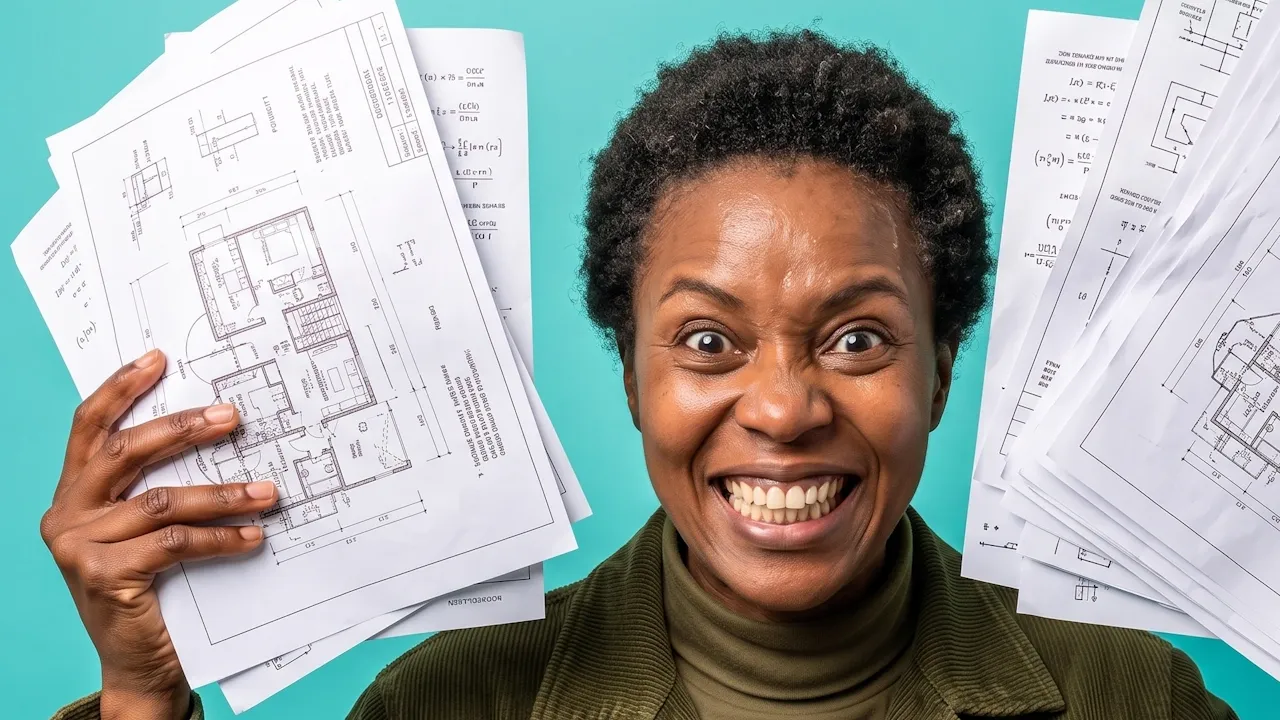
Would you trust a builder who had never met you to build your house from a folder of someone else's blueprints? So why does almost every course get built exactly that way?
Nobody would. You'd want a survey of the land first, then someone would need to understand who's going to live there, how they move through a day, what they actually need a house to do. Then, and only then, would anyone start pouring a foundation.
Yet this is exactly how most online courses get built. Someone takes a set of PowerPoint slides used for years in a classroom, uploads them to a course platform, records themselves talking over each one, and calls it a course.
It isn't. It's a filmed lecture wearing a course's clothes.
The Myth We Keep Running Into
“Just send us your slides, and we'll turn them into a course.” It sounds efficient. It sounds like exactly what a busy expert wants to hear. It's also the single biggest reason online courses get abandoned by module two.
Slides were built for a room. A room has a facilitator who reads the energy, answers questions live, and adjusts pace on the fly. Take that facilitator out and hand the same slides to someone alone on their sofa at 9 pm, and you've removed the only thing that made the format work.
What Instructional Design Actually Is
Instructional design isn't decoration. It's a discipline with a proper process behind it, most commonly structured around five stages: Analysis, Design, Development, Implementation and Evaluation, known in the field as ADDIE.
Analysis comes first for a reason. Before a single slide, script or video gets made, a proper instructional designer asks who the learner actually is, what they already know, what's stopping them from succeeding right now, and what “success” needs to look like by the end. Skip that stage and everything built afterwards is a guess dressed up as a course.
A Real Build, Starting From Nothing
We were brought in by a partner at a business supplying concrete trucks to build an online training programme for concrete truck drivers, a genuinely unusual audience for an online course. Nobody involved had built anything like it before. There was no existing slide deck to repurpose, no legacy content to lean on.
That absence turned out to be an advantage. We started with analysis rather than content. Who were these drivers, what did a shift actually involve, what had already gone wrong on-site without training, and what would this audience tolerate sitting through on a screen after a physical day's work? The website, payment system, and training content were all built around the answers to those questions rather than around what looked impressive in a proposal.
The client described the process afterwards as market-driven rather than content-driven, which is the right way round. The programme launched successfully with an audience that had every reason to disengage from a screen-based course and didn't.
A course built without analysis isn't designed. It's decorated.
— Cheryl Gregory
The Behavioural Layer Most Courses Skip
Good instructional design also borrows from behavioural science, not just adult learning theory. Gamification, spaced check-ins, and blended formats that mix live sessions with self-paced content all exist because they change how consistently someone actually shows up, not just what they understand in the moment they're watching.
None of that gets decided by accident. It gets decided in the analysis stage, before anyone touches a script.
The Question We'd Ask You
If someone stripped the slides and voiceover from your course entirely and handed you a blank page, could you rebuild the same structure based on a clear understanding of your learner? Or would you rebuild it in whatever order felt natural to explain, the same way it was probably built the first time?
If you're not certain, the course isn't finished. It's just recorded.
Where To Start
Our Instructional Design service starts with the exact analysis stage most courses skip, before a single slide is touched.
Related Service: Instructional Design Services
Schedule a Free Discovery Call
Are you looking for support in planning, designing, creating, publishing or promoting your online courses? Schedule a call and let's explore how we can help you.
GET KAJABI FREE FOR 30 DAYS
Try Kajabi for 30 days for free.
Stay connected with news and updates!


Get Kajabi Services
We’re Certified Kajabi Experts with 16 years of hands-on Kajabi experience and 25 years of instructional design expertise, combining platform mastery with powerful learning strategies to build online course businesses that truly thrive.
From big-picture growth strategy to fully “Done-For-You” implementation, we manage every detail with precision—so you can stay focused on serving your audience. We don’t just build courses; we design transformative learning experiences that convert, engage, and retain.
Our mission is simple: unlock the full potential of your Kajabi account, maximise your ROI, and create programs your students love, and keep coming back for.


50% Complete
Add Your Details
Add your details and we will email you helpful advice and insights. You can unsubscribe at any time.