I’ve spent my whole career building businesses around one simple idea: the customer experience comes first, and the human touch is never optional.
It’s why, back in 2009, I named our company 'The Customer’s Shoes Ltd.'
We don’t do “good enough”. We go the extra mile because trust is fragile, and service is remembered.
Over the years, we’ve worked with clients across the spectrum, from large organisations to small businesses. Our work spans many sectors. It shaped how I think about communication, professionalism, quality, and what it means to represent someone’s work properly.
So when a colleague came and asked me to look at recent changes on Upwork, I did what any freelancer would do: I read the documentation and tried to understand the new workflow. And honestly… I was stunned. Not because the platform is experimenting, that’s normal, but because of what these changes could mean for the freelancer experience, privacy, and trust.
“When applications become recordings and transcripts, the risk model changes, because misuse risk increases when sensitive artefacts can be accumulated at scale.”
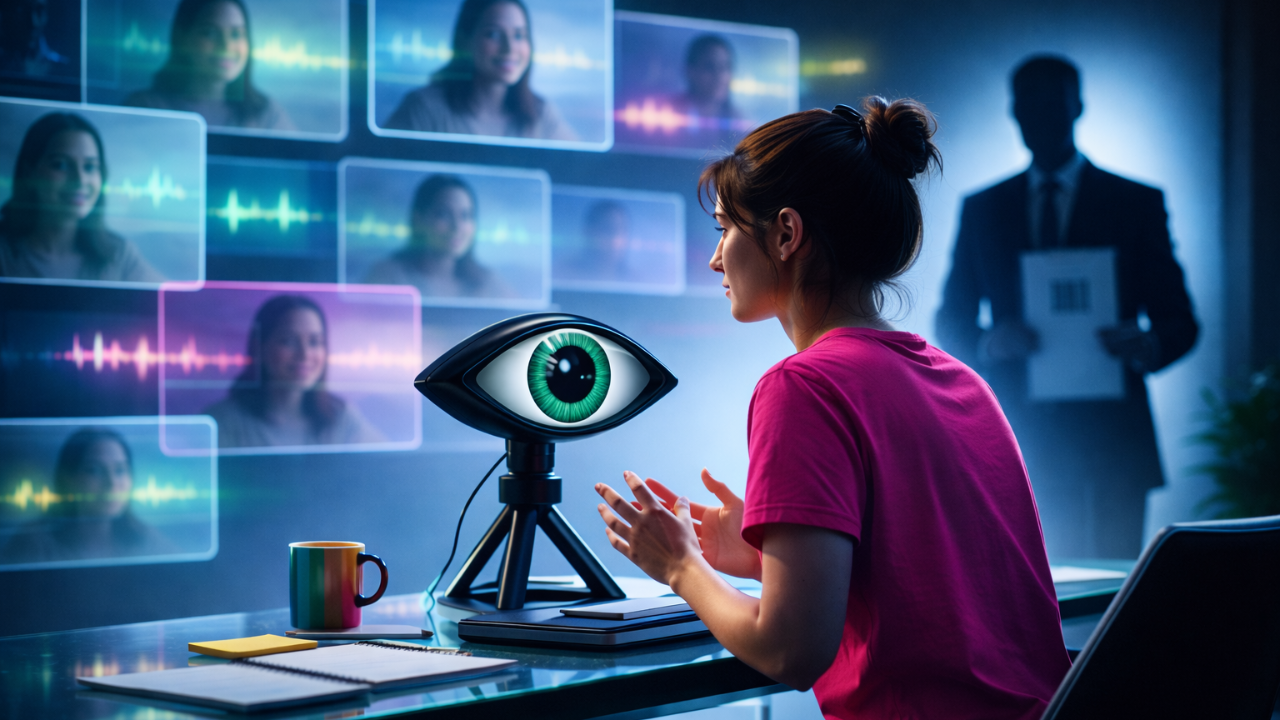
Upwork’s Uma-powered Instant Interviews may speed up hiring. But when an application becomes a video, a transcript, a summary, and potentially a score, the risk model changes.
Because the real issue isn’t just “does Upwork publish enough detail about deletion?” It’s this: recorded applications create a new asset that can be collected, copied, and misused, and freelancers have limited control once it exists.
This post is about that risk, the kind that doesn’t show up in feature announcements, but shows up later as stress, reputational damage, or worse.
What Upwork Is Introducing (In Plain Terms)
Upwork now allows some clients to enable recorded video interviews in the proposal flow, powered by Uma. If a job requires it, freelancers must complete the recorded interview to submit the proposal — as described in How To Take A Recorded Video Interview On Upwork.
Upwork also states these interviews replace the cover letter (while still allowing notes/attachments), are completed in English, typically take 5–10 minutes, and can’t be redone after submission — all covered in the same Recorded Video Interview Guidance.
Upwork’s own materials describe what clients receive: the recording, a transcript, and AI-generated outputs (such as summaries and scoring/ratings), outlined in How Video Interviews Work On Upwork and reinforced in the Instant Interviews Overview.
So yes: this isn’t speculative. It’s a real workflow change.
The Threat Isn’t The Average Client. It’s The Wrong Client.
Most clients are normal people trying to hire. The bigger concern is what happens when a feature is valuable to someone who isn’t hiring in good faith.
Recorded interviews are unusually useful to malicious actors because they can be repeated at scale, structured (questions prompt you to reveal specific details), and stored as a searchable record (video + transcript). And unlike a text cover letter, a video reply contains face/voice/mannerisms plus unintentional detail, which is exactly why Upwork’s own pages emphasise that clients can receive the artefacts (recording + transcript), not just a yes/no outcome: How Video Interviews Work On Upwork.
A written proposal is a pitch. A recorded proposal can become a profile.
A Realistic Malicious Scenario: The “Portfolio Harvester”
Here’s one way this can go wrong without anyone “hacking” anything.
A client account (or group of linked accounts) posts a steady stream of believable jobs and enables video interviews each time. Upwork’s own descriptions of this workflow and the outputs provided to clients are available in "Instant Interviews" and "How Video Interviews Work" on Upwork.
Freelancers apply in good faith. Over time, the client accumulates a private library of recorded interviews and transcripts.
What They’re Really Collecting (And Why It Matters)
Across repeated interviews, freelancers often reveal their full names, faces, voices, time zones and locations, portfolio links, niche positioning, client examples, process details, and even routines and availability patterns.
None of this is automatically unsafe. The danger is aggregation, especially when the workflow is designed to scale, as Upwork positions Uma and instant interviewing: Upwork Uma and Instant Interviews.
How A Malicious Actor Benefits — And How You Get Harmed
This type of harvesting can be used in ways that create real harm:
1. Reputation And Identity Misuse
A bad actor doesn’t need your passport to create problems. If they can capture your voice and face repeatedly, they can misrepresent you using edited clips or stitched quotes, especially when the artefacts include both recording and transcript, as described in How Video Interviews Work On Upwork.
I think this is less “Hollywood identity theft” and more credible deception, the kind that wastes your time and damages trust.
2. Competitive Extraction
Even without impersonating you, someone can extract your frameworks, positioning, and “best answers” and repurpose them. The risk here is that Upwork’s approach produces structured outputs (summary/transcript/scoring) alongside the recording, as described in Upwork Uma and Instant Interviews.
3. Targeted Harassment And Doxxing-Style Risk
Location clues + routines + social links + face/voice can add up. Again: the risk isn’t one video. It’s the dataset built over time.
“But Upwork Says It’s Designed To Be Fair…”
Upwork states these interviews are designed to focus on skills and experience, not how you look, sound, or where you’re from, in How To Take A Recorded Video Interview On Upwork.
That intent is positive. But fairness isn’t the only risk here. Even if screening is fair, creating video/transcript artefacts introduces another risk: misuse by a bad actor who was never hiring in good faith.
The Control Problem: Once It’s Recorded, What Can The Freelancer Do?
Upwork’s public materials explain how video interviews work and what clients receive (for example, "How Video Interviews Work On Upwork" and the "Instant Interviews Overview").
What is not made equally clear (in the proposal interview guidance itself) is how long proposal interview recordings and transcripts are retained, whether freelancers can delete them on request, and what controls exist once a client can view the recording and transcript.
And even if there were a retention rule, the uncomfortable truth is: a client can screen-record anything they can view.
Upwork does publish a retention/deletion timeframe for a different feature, ' Upwork Video Meetings ', here: How To Meet Using Upwork Video Meetings. But that is separate from proposal-stage video interviews, and the proposal interview pages themselves don’t spell out an equivalent retention statement in the same direct way (see Recorded Video Interview Guidance).
Upwork also provides a dedicated page for controlling AI preferences: How To Control Your AI Preferences On Upwork. A reasonable question is how proposal interview recordings/transcripts relate to these preferences and whether that connection is clearly communicated at the moment of recording.
What Freelancers Should Do (Practical, Not Paranoid)
If you decide to take these interviews, treat them like you’re recording something that could exist forever, because it might be captured outside the platform once viewable.
- Keep answers job-specific (avoid personal details, location specifics, routines)
- Avoid naming client brands unless absolutely necessary
- Don’t reveal your process “secret sauce” in full: give the outcome, not the playbook
- Use neutral backgrounds (no documents, family photos, location clues)
- Assume transcripts are searchable: speak accordingly
It’s not about being scared, it’s just about being careful with what you share.
What Upwork Should Publish Next (If They Want Trust)
If Upwork wants freelancers to embrace this, they should publish a clear “Video Interviews: Safety & Controls” page that answers, in plain English: what retention applies to proposal interview videos/transcripts, whether freelancers can request deletion and how, what misuse reporting pathways exist for interview artefacts, what safeguards exist to prevent obvious “harvesting” patterns, and how freelancers are protected if a client misuses recordings.
Because when platforms introduce recorded application steps, the responsibility isn’t just “make it easy to hire.” It’s also “make it safe to participate.”
My Final Thought
Upwork’s new interview flow might speed up hiring. But it also creates a new kind of asset: a reusable recording of you, along with a transcript and AI outputs as positioned in Upwork Uma and Instant Interviews.
And the core risk is simple: when applications become recordings and transcripts, the risk model changes, because misuse becomes easier when personal artefacts can be collected at scale.
If Upwork wants freelancers to keep showing up, it should treat that risk as a first-class problem, not a footnote.