Why The Most Qualified Experts Are Invisible Online
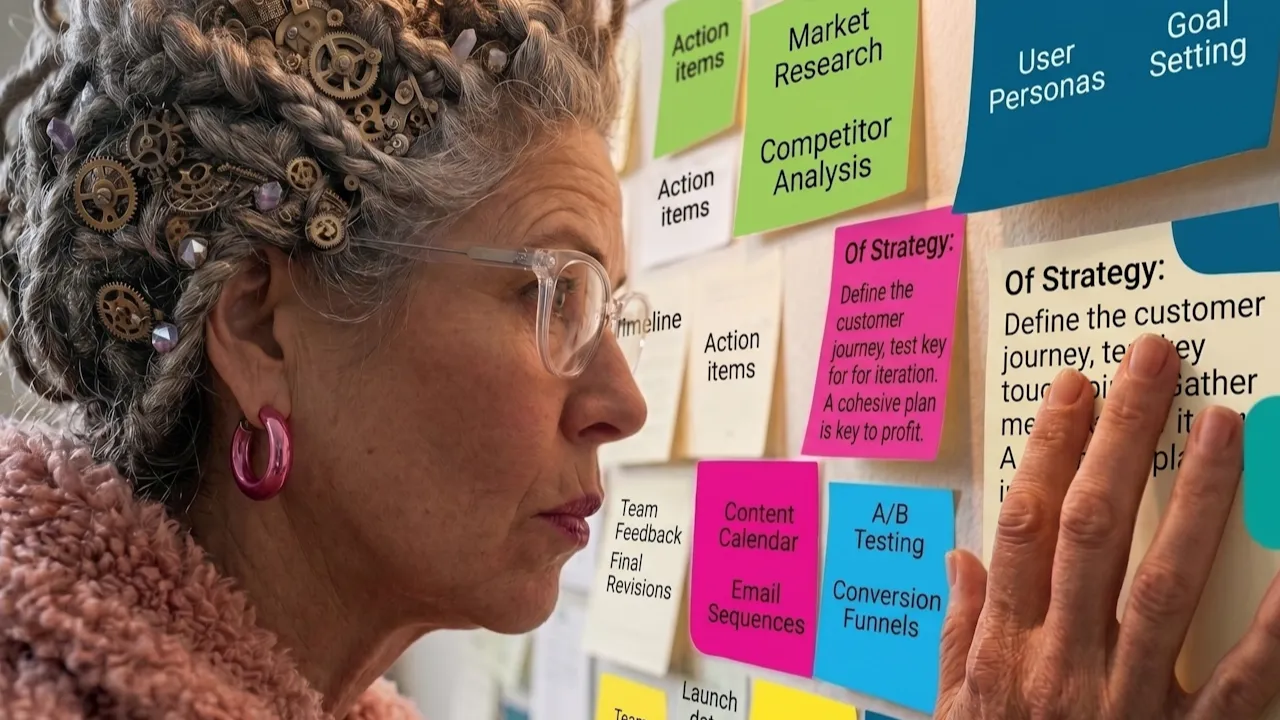
Why genuine expertise stays locked inside brilliant professionals while a billion-dollar knowledge economy expands without them, and what it costs everyone when it does.
The Quiet Crisis Most Professionals Are Too Busy To Notice
There is a particular kind of professional invisibility that has nothing to do with ability. It comes from having too much of it.
Right now, the global online learning market is worth approximately $316 billion. By 2032, analysts project it will exceed $1 trillion. The market is not waiting, and the learners are not waiting either. The platforms are certainly not waiting. What is waiting, apparently indefinitely, is the expertise that should be filling it.
Across every professional sector, the same pattern holds. Consultants with two decades of hard-won insight. Clinicians who have navigated every edge case the textbooks forgot to mention. Designers, engineers, strategists, and specialists whose judgement has been tested in conditions that cannot be replicated in a classroom. Most of them have not built a single piece of online education, and many of them never will.
We have met professionals who have been ‘about to build their course’ for somewhere between three and eight years. The intention is always genuine, but their timing is perpetually next quarter.
This is not because they lack the knowledge, but because they have so much of it that they have lost the ability to see it clearly, and no one has ever given them a process for turning it into something transmissible.
Meanwhile, less experienced voices are filling the void. They are building audiences, generating revenue, and establishing authority in spaces that rightly belong to people with far stronger credentials. The real experts are watching from the sidelines, often without fully understanding why they haven’t moved.
This piece is about that gap. What creates it? What sustains it? And what it actually costs professionally, commercially, and in terms of the learners who are quietly being short-changed.
The Billion-Pound Market Running On Second-Rate Expertise
Before we talk about what is stopping qualified professionals from entering the online education space, it is worth understanding exactly what they are not in. Because the numbers are not subtle.
These are not speculative trends. They are documented, structural shifts in how professional knowledge is transmitted, purchased, and valued globally.
$316 billion Global e-learning market valuation in 2023 projected to exceed $1 trillion by 2032
41.8% annual growth Rate at which certificate and professional development courses are expanding
The $60.3 billion MOOC market value in 2024 is projected to reach $411.6 billion by 2030
90% Share of companies now offering structured online learning to their employees
42% higher Revenue per employee in companies using e-learning programmes (IBM)
73% Learners who actively prefer online learning over in-person instruction
The corporate training market alone is instructive. Organisations are not waiting for consultants to find a gap in their calendar. They are building digital learning infrastructure at scale, actively seeking expertise to fill it, and paying handsomely for the privilege. The professionals best positioned to supply what they need are, largely, not at the table.
The MOOC sector, which is most relevant to independent course creators, is not a niche. It is a mainstream channel for working professionals across every discipline who are choosing digital learning as their primary mode of continuing professional development. That is not a trend, but it is a settled behavioural shift.
The only question worth asking is whose knowledge that market runs on. Because right now, the answer is often: not yours.
Why 80% Of What You Know Is Completely Invisible to You
In 1958, the philosopher Michael Polanyi published what remains one of the most important observations about expertise ever written: ‘We can know more than we can tell.’
He was not commenting on communication skills. He was making a fundamental claim about the architecture of expert knowledge itself.
The subsequent research built a substantial and consistent picture. Cognitive scientists now estimate that approximately 80 to 90 per cent of an expert’s knowledge is tacitly embedded in intuition, pattern recognition, and judgment that has been so thoroughly internalised through practice that it cannot be readily observed, articulated, or transferred through conventional instruction.
After roughly 10,000 hours of deliberate practice, the threshold Anders Ericsson’s research associates with expert performance knowledge becomes automated. The rules governing the expert’s decisions are compiled into unconscious processes. They cannot retrieve those rules on demand because the rules are no longer stored as accessible information. They are just instinct.
Ask a master chef to explain exactly how they know when the sauce is right, and you will get something involving instinct, experience, and a vague reference to ‘you just know.’ Which is, admittedly, not very useful to the person standing at the hob for the first time, burning things.
This is why, when we ask experienced professionals to explain what they do, they so often describe the surface behaviour and leave the actual mechanism invisible. Not because they are withholding. Because they genuinely cannot see it.
It is also why the first objection we almost always hear, ‘I don’t think what I do is teachable, is so rarely an accurate statement. It feels true. It is not.
“In twenty-five years of working with experts, the most common thing I hear isn’t ‘I don’t know enough.’ It’s ‘I don’t think what I know is teachable.’ Almost every time, they are wrong. But no one has ever given them a process for proving it to themselves.”
— Cheryl Gregory, Co-Founder, The Customer’s Shoes
The phenomenon this describes, widely known as the Curse of Knowledge, affects every specialist who has spent long enough in their field to move past conscious competence. It is one of the primary reasons why experienced professionals do not build online courses: not because their knowledge cannot be taught, but because they cannot see clearly enough what needs to be taught.
The solution is not for experts to become teachers overnight. It is to build a translation process, a structured methodology for surfacing the tacit, mapping it to real learner needs, and sequencing it in a way that can be reliably transmitted. That process is what professional instructional design exists to provide.
The Biggest Lie The Online Course Industry Tells Experts
The most persistent misconception about online course creation is that it is a content-archiving exercise. Professionals imagine that building a course means recording everything they know, packaging it into modules, and uploading it to a platform. They spend months on content, and then they agonise over slides. They film themselves from multiple angles and really make a 'mountain out of a molehill' when there is no need at all.
The result is predictable: courses that are technically comprehensive and pedagogically inert. Nobody finishes them, and nobody refers to them. They just sit in a dashboard, gathering silence and virtual dust.
The MIT data on this is worth sitting with. Research from the Massachusetts Institute of Technology found that the average dropout rate across online courses is approximately 96 per cent. That figure is routinely cited as evidence that online learning doesn’t work. It is not. It is evidence that most online courses are designed without any understanding of how people actually learn.
When courses are built with genuine instructional intent, structured around learner milestones, calibrated to human motivation, and built around measurable outcomes rather than content volume, the results look entirely different. Harvard Business School’s online programmes report completion rates of around 85 per cent. The 2U platform achieves comparable figures. The gap between 4 per cent completion and 85 per cent completion is not a function of the subject matter. It is a function of design.
The practical implication is blunt: the quality of your knowledge is not the limiting variable. The design of the learning experience is.
“Effective course design does not begin with content. It begins with friction. Where does the learner stall? Where does early confidence collapse? Where does the gap between understanding and application open up and swallow people whole? Build the course around those friction points, and you have built something that actually delivers.”
This is the shift that changes everything. When you stop asking ‘What do I know?’ and start asking ‘Where do my learners most predictably fail?’ you have the beginnings of a course that will work. Not content. Transformation and no information, but great progress.
Information is cheap, but transformation is rare. The most valuable thing an experienced professional can offer is not facts; it is a structured path through the hardest part.
Recording Your Workshop Isn’t A Course. It’s A Nap Trigger.
Professionals with existing in-person programmes fall into a particular trap; we have seen this first-hand over the years. The workshops sell out, and the energy is tangible and real. Therefore, people leave changed.
So, the obvious move seems to be to record those sessions and put them online.
It is the wrong move.
A trainer once walked into a discovery call with us carrying what he described, not without pride, as ‘everything we need.’ He had spent the better part of six months recording his in-person masterclass. Twelve modules. Four to five hours each, all with high production values. A proper tripod and everything.
We asked how many people had completed it.
There was a pause...
‘Well,’ he said, ‘it’s only been live for three months.’
We asked him to check his analytics. He came back to us a week later. Forty-three people had enrolled. Two had made it past module three. One of those was his business partner, who admitted to watching it at twice the speed while doing the ironing.
He had not built a course. He had built a very expensive filing cabinet.
The content was genuinely excellent. The expertise was real and hard-won. But the programme had been designed for a room for live energy, for his ability to read a face and adjust, for the particular alchemy that happens when a group of people are in the same space and cannot quietly close a browser tab. Translated to a screen with none of those dynamics intact, it had become something that felt, to learners, like being talked at for forty hours.
We rebuilt it from scratch. Not the content that stayed largely intact. The structure, the sequencing, the pacing, and the points at which learners were asked to actively do something before moving forward. Eight weeks later, the revised version launched. Completion rate: 71 per cent.
The expertise did not change. The design did.
Recording a workshop preserves content. It does not preserve learning. What makes in-person instruction work is dynamic responsiveness, the moment a trainer reads the room, slows down, adjusts the example on the fly, catches the expression that says something has not landed. None of that survives a static recording. What you get instead is a long video that made perfect sense in a room and becomes completely passive on a screen.
The translation from in-person to online requires dismantling the original structure and rebuilding it around how digital learning actually works. Identifying the discrete capabilities being developed at each stage, creating practice opportunities that function without a facilitator present, building feedback mechanisms that compensate for the absence of live interaction, and sequencing content so that each module creates the conditions the next one requires.
This is not a technical exercise. It is a design challenge. And it requires a willingness to question the assumptions that made the in-person version work because many of them will not transfer.
The real opportunity is not a recording. It is a reconstruction.
The Four Myths Quietly Killing Your Course Before It Starts
“The market is too crowded.”
Crowded markets are not saturated markets. They are validated markets. When a subject area has numerous courses available, it is because sustained demand exists. Learners in so-called crowded markets are not buying the only option available; they are buying the course that most precisely addresses their challenge. A professional with genuine domain depth and a clearly defined learner outcome has a natural competitive advantage in any busy market, because most of what is out there is at best surface-level. Depth wins if it is designed to be accessible.
“I need a large audience before I can launch.”
You need resonance, not volume. A small, focused group of people with a shared, acute need will significantly outperform a large, indifferent following in enrolment, completion, and referral. Sustainable education businesses have been built from audiences of fewer than 500 people. The relevant variable is not how many people you can reach. It is how precisely your course speaks to something they genuinely need.
“It needs to be perfect before I launch.”
Perfectionism in course creation is almost always procrastination with better PR. We once worked with someone who had been refining the introduction to their course for seven months. To be fair, it was an excellent introduction. The rest of the course did not yet exist. Courses improve through contact with real learners, as questions reveal what was unclear, stumbling blocks that were not anticipated in design, and feedback that redirects the focus. The professionals waiting for a flawless course before launch are waiting for a condition that can only be created after launch. The first version is not a final product. It is a hypothesis tested against reality.
“My experience isn’t interesting enough to build a course around.”
This one is almost always inverted. Professionals with the deepest, most specific experience, the ones who have spent years solving real problems at the sharp end of a real industry, consistently undervalue the rarity of what they carry. The more lived your expertise, the more precisely it maps to the actual struggles of the people who most need it.
Generic, theoretical content is everywhere, and hard-won practical knowledge, properly structured and accessibly delivered, is genuinely scarce.
What Instructional Design Actually Is (And Why Most Course Creators Have Never Heard Of It)
Instructional design is the discipline of translating expertise into structured learning. Not video production. Not slide design. Not platform setup. The systematic process of identifying the outcomes a learner needs to achieve, mapping the gap between where they currently are and where they need to be, sequencing content to close that gap, and building in the feedback and practice that make new knowledge stick.
The evidence base for well-designed online instruction is substantial. Online courses built with deliberate instructional architecture achieve retention rates 25 to 60 per cent higher than those of traditional classroom teaching.
Learners in well-designed programmes complete coursework 40 to 60 per cent faster than equivalent in-person cohorts. Coaching-supported programmes that combine instructional design with live touchpoints achieve completion rates above 70 per cent.
These outcomes are not accidents. They are the product of specific design decisions: module sequencing that builds skills in the correct order; lesson structures that introduce, model, and practise before moving on; assessments that surface misunderstandings before they compound; feedback loops that sustain motivation by delivering visible, frequent wins.
What professional instructional design brings to an expert is a framework for making the tacit explicit. Through structured elicitation, examining not just what the expert knows, but where their learners historically struggle, what questions they are repeatedly asked, where the gap between understanding and application tends to open, a skilled instructional designer can surface the 80 to 90 per cent of expertise the expert themselves cannot readily see.
The result is not a reflection of the expert’s knowledge as the expert experiences it. It is a reconstruction of that knowledge organised around the learner’s journey. That distinction between expert-centred content and learner-centred design is the single most consequential difference between courses that sit dormant and courses that change people.
‘Passive Income’ Is The Wrong Goal. Here’s The Right One.
The phrase ‘passive income’ has done remarkable damage to the online course conversation. It conjures an image of someone on a sun lounger, laptop cracked open at a jaunty angle, watching revenue notifications arrive while sipping something cold. It is also, as a primary motivation for building an online course, almost guaranteed to produce something nobody finishes.
It frames course creation as a revenue play, a mechanism for monetising knowledge while doing nothing. That framing both oversells and undersells what a well-built course can actually do.
The more accurate frame is this: a professionally designed online course is a scalable impact vehicle. It extends the reach of your expertise beyond the physical and temporal limits of your direct practice. The financial returns are real, but they are a consequence of the impact, not the goal.
Consider what this means for a professional currently delivering value through one-to-one consultancy or in-person programmes. Their reach is bounded by the hours they personally work and the people who can physically access them.
A well-designed online course removes both constraints. It operates independently of their schedule. It reaches people in geographies they will never visit. It delivers a consistent standard of instruction that does not degrade with fatigue, distraction, or a difficult week.
The professionals who understand this shift, who move from thinking of their time as the product to thinking of their structured knowledge as the product, describe it as a fundamental reorientation of how their expertise operates in the world. They are no longer renting out hours; they are building assets.
With 90 per cent of businesses now offering online learning and a 42 per cent revenue uplift per employee associated with structured e-learning, the appetite for high-quality professional expertise packaged accessibly and delivered at scale is structural and growing. Professionals who have not positioned their knowledge within that market are not protecting their standards. They are ceding ground to people with less to offer.
The Window Is Narrowing. Most Experts Haven’t Noticed.
There is a change underway in professional education that most established experts sense but have not fully articulated. Knowledge is escaping the confines of rooms and calendars. It is embedding itself in digital structures that operate without the originator present, travelling across geographies, time zones, and career stages, reaching people who would never have accessed the expertise through traditional channels.
The professionals building within this shift are not, on the whole, the most credentialled people in their fields. They are the ones who understood earliest that the form in which expertise is delivered has become as important as the expertise itself. They built first, and then they iterated in public. They now hold positions of authority in digital spaces that will not easily be displaced, regardless of how much deeper the credentials of late arrivals might be.
That is not a comfortable observation. But it is an accurate one.
The window for first-mover advantage in most professional niches is narrowing, not widening. The question for any expert who has been watching from a distance is not whether the shift is real. It is whether they are prepared to let their impact remain permanently capped by the hours they personally work.
Well-designed online courses do not replace human expertise. They amplify it, and they allow a professional’s best thinking to operate independently, reaching the people who most need it, long after the professional has left the room. That is not a dilution of expertise, but it is its most powerful expression.
The One Question Worth Asking Before Any Of The Rest
If you are a professional who has been seriously considering this or half-considering it for the past two years while the to-do list grows, the question worth asking is not ‘How do I build a course?’ That question jumps too quickly to logistics.
The real question is more specific and more honest.
“What transformation can you reliably deliver and are you prepared to structure it so that others can access it without you standing beside them?”
That question cuts through the technology debates, the platform comparisons, and the procrastination disguised as preparation. It forces a confrontation with the actual material: the specific shift you can create in a learner, the conditions under which that shift reliably happens, and whether you are genuinely willing to do the work of making it transferable.
The first step is not a camera, a microphone, or a course platform subscription. It is an honest inventory of the outcomes you deliver and an investigation into the friction points that stand between where your learners start and where they need to be. That investigation conducted with proper instructional rigour is where every effective course begins.
The professionals who have made this transition consistently report the same thing: the process of building the course taught them things about their own expertise they did not previously know.
It surfaces knowledge they had long since stopped seeing. It forces precision where there was comfortable vagueness. It creates clarity about what they actually do, which makes everything else they offer, the consultancy, the speaking, the advisory work, sharper and more effective.
Your expertise is not too complex to teach. It is not too tacit to structure. It is not too specialised to build an audience around. What it requires is a process designed to extract it, a framework designed to transmit it, and a decision to stop waiting for the moment to feel right.
That moment will not arrive from the outside. It is a choice.
Ready To Build Something That Works Without You?
Most course projects fail not because the expert lacks knowledge, but because no one has provided a rigorous process for translating that knowledge into a designed learning experience.
At The Customer’s Shoes, this is what we do: working with experienced professionals to surface their expertise, map it to real learner outcomes, and build structured programmes that produce measurable results.
If you are ready to explore what your expertise could look like in a well-designed, rigorously structured, and well-positioned scalable online education programme, we would welcome the conversation. Get in touch to arrange a Complimentary Discovery Call.
Research & Sources
Market size data: Skillademia; Business Research Insights; GlobalMarketInsights (2024–2025). Tacit knowledge: Michael Polanyi, Personal Knowledge (1958); Nonaka & Takeuchi; Cognitive Fingerprint AI (2024). Expertise and deliberate practice: K. Anders Ericsson. Corporate e-learning ROI: IBM Research via Entrepreneurship HQ; Statista (2024). Course completion data: MIT MOOC research; EdSurge (2019); 2U; Harvard Business School Online. Learner retention and preference: Research Institute of America; World Economic Forum; LinkedIn Learning (2024). MOOC market projections: Research and Markets (2025).
Schedule a Free Discovery Call
Are you looking for support in planning, designing, creating, publishing or promoting your online courses? Schedule a call and let's explore how we can help you.
GET KAJABI FREE FOR 30 DAYS
Try Kajabi for 30 days for free.
Stay connected with news and updates!



Get Kajabi Services
We’re Certified Kajabi Experts with 16 years of hands-on Kajabi experience and 25 years of instructional design expertise, combining platform mastery with powerful learning strategies to build online course businesses that truly thrive.
From big-picture growth strategy to fully “Done-For-You” implementation, we manage every detail with precision—so you can stay focused on serving your audience. We don’t just build courses; we design transformative learning experiences that convert, engage, and retain.
Our mission is simple: unlock the full potential of your Kajabi account, maximise your ROI, and create programs your students love, and keep coming back for.

50% Complete
Add Your Details
Add your details and we will email you helpful advice and insights. You can unsubscribe at any time.